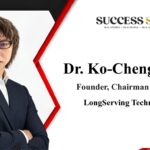








Beyond the Battery: Dr. Ko-Cheng Fang’s Quiet Race to Set Transportation Free
Success Stories Media Featuring: Dr. Ko-Cheng Fang, Founder, Chairman & CEO | LongServing Technology While the world’s biggest tech companies race publicly toward the next generation of...

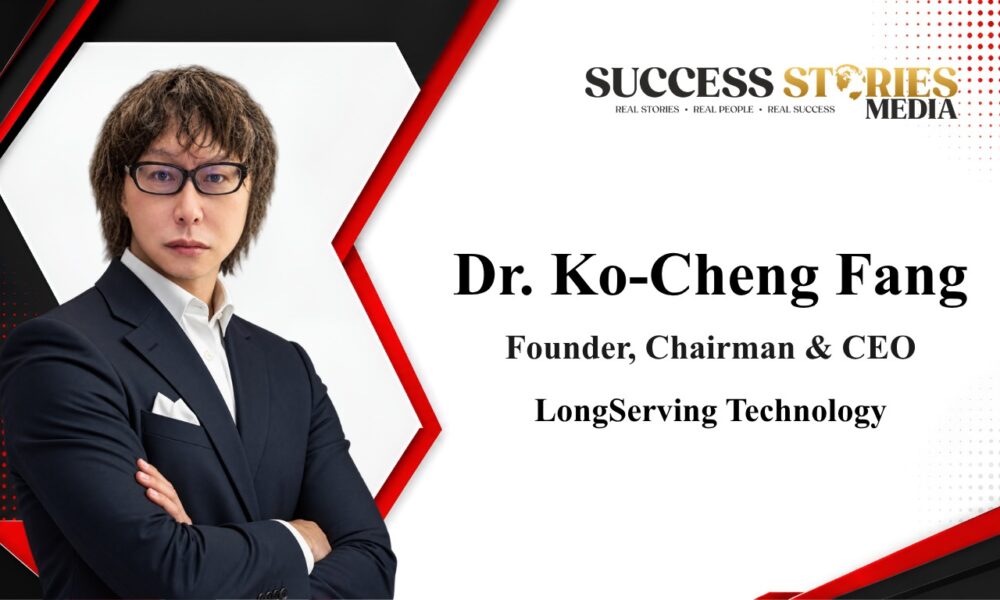
Table Of Content
- While the world’s biggest tech companies race publicly toward the next generation of energy storage, Dr. Ko-Cheng Fang has been building his answer quietly, and aiming considerably higher than the road.
- A Quiet Race
- A Dream He Has Carried Since Childhood
- Chasing the Impossible: A Career of Being Doubted
- A Philosophy Built on Self-Imposed Limits
- Two Elements, One Vision
- Built Without Asking for a Single Penny
- What Comes Next
Featuring: Dr. Ko-Cheng Fang, Founder, Chairman & CEO | LongServing Technology
While the world’s biggest tech companies race publicly toward the next generation of energy storage, Dr. Ko-Cheng Fang has been building his answer quietly, and aiming considerably higher than the road.
A Quiet Race
For years, Dr. Ko-Cheng Fang’s company, LongServing Technology, has been developing solid-state battery technology largely out of public view, entering a field currently being fiercely pursued by nearly every major global tech company. It is a race with enormous stakes and no shortage of competitors, from established automakers to some of the world’s most well-funded technology firms, yet Fang has chosen a different posture than most of them. Rather than announcing ambitions before the science is ready, he has let the work itself set the pace, treating publicity as something that should follow proof, not precede it.
His reasoning starts with a clear-eyed critique of what the industry currently accepts as good enough. Lithium iron phosphate batteries, along with nickel-cobalt-manganese lithium batteries, remain the mainstream choice for automakers today, and for good reason: they are proven, scalable, and well understood. But Fang sees their limitations as structural rather than incidental. Both chemistries carry a susceptibility to flammability and a driving range that, in his view, will continue to fall short of what the next generation of transportation actually demands. For Fang, these are not minor engineering inconveniences waiting to be optimized away. They are ceiling constraints built into the chemistry itself, the kind of limitation no amount of refinement can fully engineer around.
He has watched the alternative paths being explored elsewhere in the industry just as closely. Small-scale nuclear propulsion has emerged as another area of intense global focus, drawing serious research investment from companies chasing energy density far beyond what conventional batteries can offer. Fang doesn’t dismiss its technical promise outright. But he is direct about where he believes that path runs into a wall: the risks of nuclear contamination and radiation exposure remain unavoidable with today’s methods, in his assessment, a reality he says will keep the technology from finding genuine, everyday application, however compelling its performance numbers look inside a research lab.
That combination (skepticism toward flammable, range-limited batteries on one side, and wariness of nuclear risk on the other) is what pushed Fang’s focus toward solid-state technology as the path he believes is genuinely viable.
A Dream He Has Carried Since Childhood
Fang traces his ambition to something far more personal than market analysis. For as long as he can remember, he has had a recurring dream: floating in mid-air, flying by will alone. In it, he often finds himself soaring above a highway, overtaking the vehicles moving below, a vivid, specific image he says he returns to again and again, and has never fully let go of.
It wasn’t until he began practicing meditation, Fang says, that he arrived at his own interpretation of what he believes those dreams represented: a craft of extraterrestrial origin, powered by a compact nuclear system and controlled by thought itself. He is careful to describe this as his own subjective experience and personal belief rather than a scientific claim. But he credits that recurring dream, and the meaning he found in it, with helping shape the two-part problem he has spent the past two decades trying to solve: a material capable of countering gravity, and a nuclear power source compact and safe enough to sit inside it.
By his own account, he searched extensively through research literature and archival material looking for any precedent, and found none. Concluding that no existing body of technology addressed what he’d envisioned, he turned to laboratory work instead, building out chemical and metal-processing research from first principles, on his own terms.
Chasing the Impossible: A Career of Being Doubted
Fang says this isn’t the first time his work has been met with skepticism before it was met with proof. He points to a string of earlier projects he describes as similarly dismissed at the outset: laboratory-grown Imperial Green jade, a project he says drew two decades of criticism before it was realized; a combination-lock mechanism he invented but never publicized; and a photon material with a claimed two-nanometer wavelength, which he says the physics community considered impossible. He says LongServing recently published footage on the company’s website demonstrating the material’s light path bending at a 90-degree angle, with a stable wavelength shown on an oscilloscope.
Normal people would say I was crazy, Fang says of the reaction his projects have typically drawn. If not crazy, then a liar. But I completed them one by one, didn’t I?
A Philosophy Built on Self-Imposed Limits
Fang attributes much of his output to a deliberate choice to work outside institutional science rather than within it. In his view, mainstream research culture (academic peer review, corporate R&D budgets, conventional engineering paths) imposes limits on what gets pursued long before any experiment begins. He says a researcher proposing his kind of work inside a university would be turned away by the mainstream; inside a company, it likely wouldn’t be funded; as an employee, it would likely cost someone their job.
He describes his own temperament as closer to an artist’s than an engineer’s: treating scientific research the way he treats creative work, and finding meaning specifically in the resistance it generates. Do you know what it feels like to fly against the wind? he asks. Without a headwind, you cannot feel flight. Without challenges, there is also a lack of the pleasure of overcoming them.
Two Elements, One Vision
The current phase of Fang’s research centers on what he describes as two necessary components: a material capable of countering gravity, which he calls floating metal, and a compact solid-state nuclear power source designed to sit alongside it. He frames the physics behind the idea in broad terms, that matter and its inverse coexist throughout the universe, from photon radiation to black holes, and that gravity itself is only one half of a larger picture with an as-yet-unsynthesized counterpart. He believes that counterpart doesn’t occur naturally on Earth and must be built rather than found.
On the power side, Fang argues nuclear fission’s association with radioactive contamination is a limitation of how humanity has approached it since the mid-twentieth century, rather than an unavoidable property of the reaction itself. He believes a controlled fission process without destructive byproducts is possible, describing it as the foundation of the power source LongServing has been pursuing. He says the company recently broke through what he calls the core manufacturing process behind the concept, and expects the resulting invention to be made public soon.
Built Without Asking for a Single Penny
Fang describes the twenty years behind this research as entirely self-funded, never short of money, and never needing to borrow any, for any piece of equipment or any direction the work took him. He credits a decades-long relationship with a chemical raw materials supplier in Taipei, a connection dating back to childhood and carried through both of their families since, as part of what has made that independence possible.
What Comes Next
Fang says he doesn’t expect skepticism to disappear before the invention does. What he’s asking for, in the meantime, isn’t belief, it’s attention. Whenever you look up at the sky, he says, the sky is also looking at you. He has left the timing of the announcement open, telling Success Stories Media the outlet is free to publish this account now, or hold it and let it stand as the story behind the invention once it’s finally revealed.



No Comment! Be the first one.