








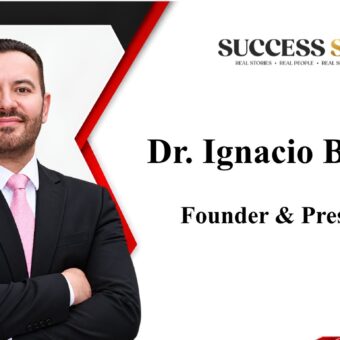
How Dr. Ignacio Bonasa Is Rethinking Education Around a Question Business Rarely Asks
Spain’s Business Visionaries Shaping a New Era of Growth, 2026 — Success Stories Media There is a familiar hush that arrives after big wins, after the promotion lands, the deal closes, the...

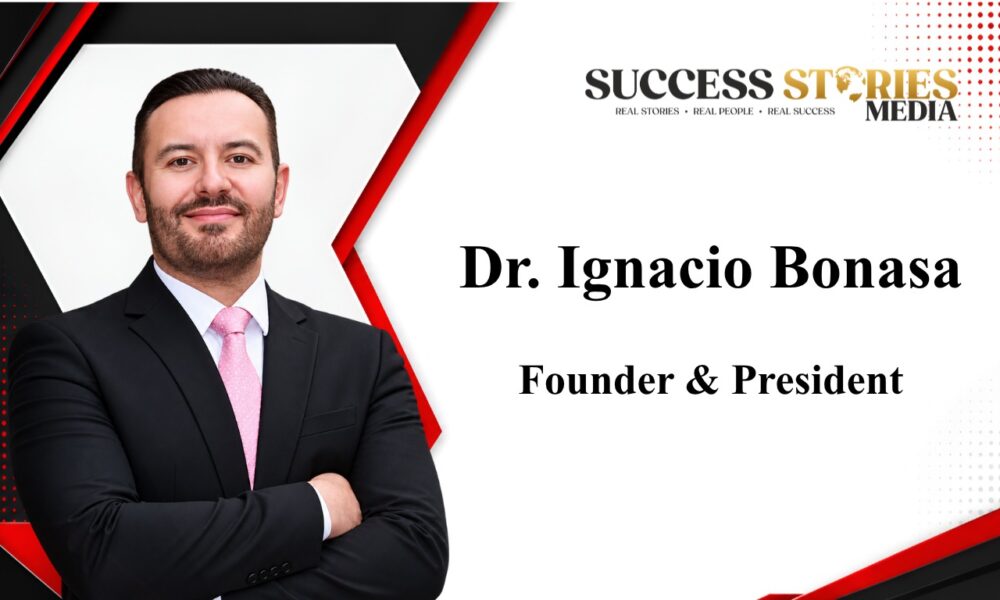
Spain’s Business Visionaries Shaping a New Era of Growth, 2026 — Success Stories Media
Table Of Content
- A Convergence, Not a Single Spark
- The Gap He Says the World Is Living In
- Rescuing a Word That’s Lost Its Meaning
- Eight Dimensions, One Whole Person
- Why Architect Chosen Deliberately
- Leading Through an AI-Saturated, Uncertain Future
- Purpose, Not Slogans
- Where Performance and Well-Being Actually Overlap
- Looking Toward Ibero-America
- If He Could Rebuild Higher Education From Zero
- A Legacy Counted in Stories, Not Campuses
There is a familiar hush that arrives after big wins, after the promotion lands, the deal closes, the title is finally earned, when someone quietly notices they’ve assembled an impressive career without necessarily building a fulfilling life.
Dr. Ignacio Bonasa has spent years sitting with people inside that exact hush: executives, founders, and senior leaders who had become experts at winning while slowly losing track of their reasons for playing the game.
He has since turned that observation into an institution.
The University of Happiness and Well-Being, which he founded and leads, is not, he’s quick to point out, a wellness retreat dressed up in academic language. It’s a more ambitious wager: that genuine, carefully studied happiness deserves a central place in higher education, not a footnote.
We teach people how to earn a living, he says, but not always how to build a life.
For Success Stories Media, Bonasa stands out as a distinctly Spanish kind of business thinker, someone probing not just how companies scale, but what all that scaling is actually meant to accomplish.
A Convergence, Not a Single Spark
Bonasa is careful to push back on a common misconception right away: the university wasn’t the product of one sudden insight. It emerged gradually, from years spent moving through very different professional worlds that eventually pointed toward the same idea, that real transformation has to involve the whole person.
His time in banking left him with discipline, strategic thinking, and a lasting respect for measurable outcomes. Later, building his venture LIDERARTE Factoría de Talento pulled his attention toward the more human dimensions of organizations: emotion, creativity, culture, and leadership.
Art, somewhat unexpectedly, became a powerful tool in that work, able to reach parts of a person that standard corporate training rarely touches.
Eventually, he felt these threads needed more room than a single workshop or keynote speech could offer.
If happiness, well-being, purpose, and humanistic leadership matter this much to the future of people and organizations, he asks, “why are they still treated as side issues?
That question, asked enough times, became the university’s founding idea, not let’s build another university, but something closer to an audit of what a university should actually offer people in this century.
Knowledge still matters enormously in his view, but knowledge without self-awareness can fall short. Career success is important, but success without personal meaning can quietly turn hollow.
The Gap He Says the World Is Living In
Bonasa frames the university as an answer to a modern contradiction: humanity has unprecedented access to information and technology, and that access hasn’t solved some of our most basic human struggles.
People are more digitally connected than ever, and many are also more isolated than ever. Companies chase efficiency while wearing down the very people driving it. Graduates leave school technically capable and still feel unequipped for uncertainty, setbacks, relationships, and the major turns that make up a real life.
He’s careful not to frame the university as opposed to traditional academic fields, it isn’t dismissing them. Instead, it’s trying to restore something education has let slip: what he calls the practice of living, leading, and thriving as a complete person.
What sets the project apart, he says, is its insistence on treating well-being holistically. It isn’t one class tacked onto an existing curriculum, it’s an ecosystem, where the body, mindset, emotions, relationships, career, finances, and technology are treated as interconnected systems rather than isolated topics.
A second distinguishing element is grounding knowledge in lived experience. In his view, happiness can’t be taught purely from a textbook, it requires reflection, conversation, and practice.
A third is that the university looks beyond individual happiness to the leadership styles, cultures, and institutional habits that either support or quietly erode well-being at scale.
Rescuing a Word That’s Lost Its Meaning
Ask Bonasa what happiness actually means, and he immediately resists the shallow version of the answer.
Reduce it to feeling good all the time, he warns, and you set an unrealistic, even damaging, bar. Grief, uncertainty, exhaustion, and loss are simply part of being alive.
A meaningful life isn’t one without pain, he says plainly.
What he’s really pointing toward is closer to flourishing, the ability to move through the full range of human experience while maintaining a reasonable sense of coherence, connection, vitality, purpose, and inner freedom.
It includes positive feeling, but it goes well beyond that, into relationship quality, the meaning behind work, physical and mental habits, and a felt sense that one’s life connects to something worth pursuing.
That, he argues, is exactly why happiness deserves serious study, in both academic and organizational settings. It shapes how decisions get made and how people treat each other. In leadership, he notes, no manager can manufacture happiness for an employee, but leaders absolutely shape the conditions that either nurture or damage well-being, through how people are recognized, listened to, challenged, and rewarded day to day.
The university wants to move happiness from decoration to discipline. The question shifts from “Are you happy? to something closer to: What conditions let you, and the people around you, flourish over the long run?
Eight Dimensions, One Whole Person
The academic model rests on eight interlocking dimensions:
- Body
- Thought
- Emotions
- Transcendence
- Social life
- Professional life
- Finances
- Technology
The real insight, Bonasa stresses, isn’t found by studying each dimension separately, it’s in seeing how they interact. Financial pressure bleeds into relationships. Career dissatisfaction shows up in physical health. Technology quietly reshapes attention, identity, and connection whether we invite it to or not.
Traditional education has leaned into narrower and narrower specialization. Specialization still matters, he acknowledges, but people don’t actually live inside academic departments.
We wake up each morning as whole people, he says.
Educating the whole person, in his framework, isn’t about prescribing one version of a good life. It’s about equipping people to notice how these dimensions interact, so they can build more coherent lives without giving up ambition.
Why Architect Chosen Deliberately
The title Bonasa has taken on The Architect of Happiness carries a deliberate modesty that’s easy to miss.
An architect, he explains, doesn’t force a building to stand upright. An architect designs the conditions and foundation that make standing possible in the first place.
No one, he insists, can hand someone else happiness. What an institution can offer instead is the environment, method, and culture that make flourishing more accessible.
The metaphor also guards against oversimplifying the work, architecture demands balance, materials, context, and constant attention to how elements interact, much like well-being resists being reduced to a single fix.
And notably, he’s quick to add that the architect isn’t the star of the finished building. The people who live in it are, he says. His job as founder, in his own telling, isn’t to center the university on himself, but to lay a foundation solid enough for faculty, researchers, and students to eventually take the project well beyond what he could build alone.
Leading Through an AI-Saturated, Uncertain Future
Bonasa’s tone sharpens when the conversation turns to leadership.
The future, he says, will reward fluency with technology, but technology alone can’t decide what’s worth building, what should stay human, or which trade-offs society is willing to accept.
Humanistic leadership, as he frames it, isn’t nostalgia for a pre-digital era. It’s a strategic necessity for what’s ahead.
He describes the leaders the university hopes to shape as people who can listen and still make the call; show empathy and still hold people accountable; innovate while keeping ethical lines intact; and understand data without reducing people to it.
Uncertainty itself, he says, is redefining leadership. No leader can credibly claim to have all the answers anymore. Leading well is becoming less about projecting certainty and more about setting an honest direction, without hiding difficulty, while helping people stay adaptable without living in constant anxiety.
For Spain’s rising generation of business leaders, he argues, this marks a real shift: leadership is judged not only by financial results, but by the quality of the environment leaders create for the people around them.
Purpose, Not Slogans
Purpose comes up in nearly every answer Bonasa gives, and he’s careful to separate it from grandiosity.
Pleasure can exist without purpose. So can comfort. So, even, can conventional success. But sustained flourishing, he argues, gets much harder when people can’t connect their daily effort to something meaningful.
Purpose doesn’t require changing the world. It can show up in raising a family, running an honest business, teaching, creating, serving others, or doing ordinary work with real integrity.
Universities, in his view, shouldn’t tell people what their purpose is that would defeat the point. What they can do is create the questions, experiences, and reflective space that make purpose easier to discover for oneself.
Organizations carry a similar responsibility. Corporate purpose can’t substitute for personal purpose, but the two can genuinely intersect when a company’s stated values actually show up in behavior, not just in mission statements.
Where Performance and Well-Being Actually Overlap
For Success Stories Media, which tracks the ideas shaping Spain’s next era of business growth, perhaps the sharpest part of Bonasa’s philosophy is his refusal to treat performance and human flourishing as opposites.
He’s watched both extremes fail. Some organizations squeeze out short-term results through fear and exhaustion. Others become so averse to hard conversations that “well-being” quietly becomes cover for low accountability.
Neither, in his experience, holds up over time.
Humanistic leadership isn’t about lowering the bar or dodging difficult conversations, organizations still exist to create value, and people still need clarity, accountability, and high expectations. The real question is how that performance gets produced, and whether it’s sustainable.
People aren’t an obstacle to performance, Bonasa says. Properly understood, human flourishing can be one of its deepest sources.
That view may only grow more relevant as companies navigate talent shortages, technological disruption, shifting employee expectations, and the accelerating reach of artificial intelligence.
Looking Toward Ibero-America
Bonasa’s ambitions reach well past Spain, though Spain remains an important anchor point. He sees Mexico and the broader Ibero-American region as a natural next step, given their cultural depth and strong relational traditions.
From there, he envisions growth through partnerships and research that respect local context rather than exporting a single fixed formula.
His goal isn’t scale for its own sake, it’s meaningful reach. He wants the university to become a genuine gathering point for researchers, educators, entrepreneurs, and leaders who take human flourishing seriously.
The true measure of international impact, he suggests, won’t be how many countries carry the university’s name. It will be how many places start asking better questions about what progress is actually for.
If He Could Rebuild Higher Education From Zero
Asked what he’d change about higher education broadly, Bonasa doesn’t call for abandoning rigor, he calls for expanding what counts as rigorous.
Students should still study math, science, law, business, and other professional fields. But alongside those, he’d weave in self-awareness, emotional literacy, ethics, purpose, and responsible technology use as core material, not electives on the margins.
He’d also change how learning happens, pushing students toward more direct contact with ambiguity, failure, and real human situations, rather than staying purely abstract.
And he’d change how educators see their own role: less as transmitters of increasingly abundant information, more as mentors, curators, and designers of meaningful experience.
Above all, he believes every university should sit with one uncomfortable question: What kind of person is our educational system actually shaping?
It’s a question, he notes, that reaches well beyond education, straight into business, leadership, and society at large.
A Legacy Counted in Stories, Not Campuses
Asked to look twenty years ahead, Bonasa doesn’t measure success in enrollment figures or campus counts.
He wants proof that the broader conversation about education has genuinely shifted. He wants organizations to treat human flourishing as a matter of strategy and leadership, not a line item buried in an HR handbook. He wants a community that has outgrown its founders.
And, above all, he wants stories, thousands of them: people who rediscovered their sense of purpose, leaders who changed how they treat their teams, entrepreneurs who found that achievement and meaning don’t have to sit on opposite sides of a ledger.
Asked what he hopes people remember about him, he doesn’t reach for titles first. He hopes to be remembered as someone who tried to stitch back together things the modern world had pulled apart: results and humanity, ambition and soul, rigor and happiness.
Buildings don’t make a university,” he says. People do. Purpose does. Transformation does.
It’s a fitting note to end on, for someone who built an institution on a fairly radical premise: the most serious work education can do isn’t just preparing people for a career, it’s preparing them for a life.
That, in the end, is why Dr. Ignacio Bonasa earns a place among Spain’s Business Visionaries Shaping a New Era of Growth, 2026, not because he rejects the language of performance, but because he’s asking business and education alike to reconsider what performance is really for.
Read Full Article: https://successstoriesmedia.com/the-architect-of-hope-how-dr-deena-moustafa-is-redefining-the-future-of-autism-care





No Comment! Be the first one.