







Business Trends Every Entrepreneur Should Watch in 2026
Running a business in 2026 feels significantly more challenging than it did just a few years ago. The pace of change has not slowed down; on the contrary, it has accelerated. Successful entrepreneurs...

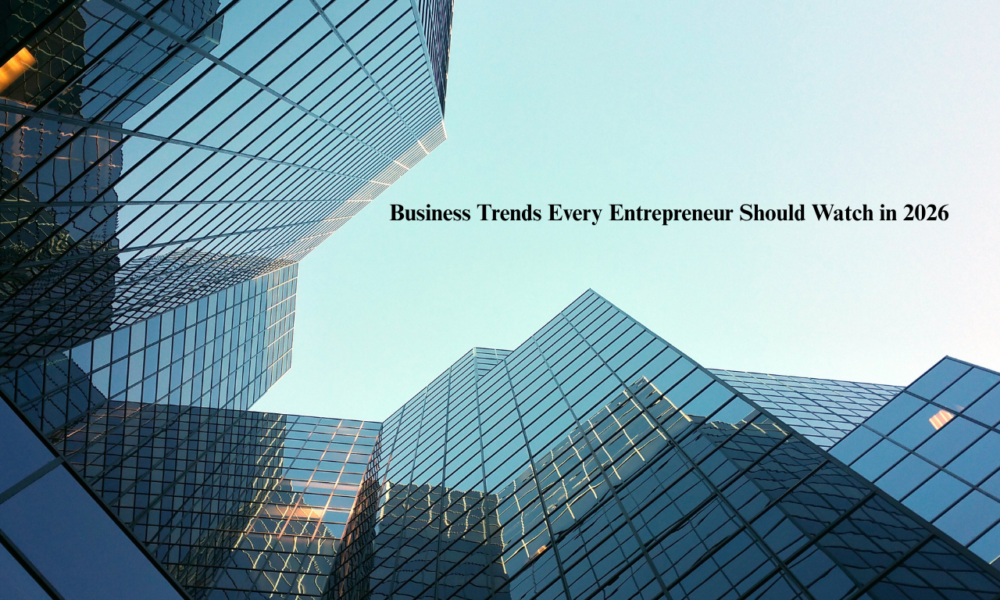
Running a business in 2026 feels significantly more challenging than it did just a few years ago. The pace of change has not slowed down; on the contrary, it has accelerated. Successful entrepreneurs are those who paid attention to emerging trends early on, rather than waiting for them to become fully established.
Table Of Content
- AI (Artificial Intelligence) Is No Longer Merely a Peripheral Activity; It Has Become an Integral Part of Business Operations
- Customers Are Watching How You Operate, Not Just What You Sell
- Hybrid Work Settled In and Isn’t Leaving
- Recurring Revenue Is Showing Up in Unexpected Places
- Personalized” Now Means Actually Personal
- Individual Creators Are Building Real Companies
- No-Code Tools Are Erasing the Technical Barrier to Starting
- Cybersecurity Isn’t Just an IT Problem Anymore
- Hiring Is Getting Faster, and More Flexible
- Nobody’s Building Alone Anymore
- The Real Takeaway
You do not need to chase every single change. However, staying informed about current developments is essential so that you can determine what is truly important for your business.
AI (Artificial Intelligence) Is No Longer Merely a Peripheral Activity; It Has Become an Integral Part of Business Operations
A few years ago, “using AI” was often limited to deploying a chatbot or automating email workflows. Today, however, it is deeply embedded in core business functions such as forecasting demand, drafting marketing copy, resolving initial-level customer issues, and identifying real-time pricing opportunities.
What’s changed most is accessibility. You don’t need a data science team anymore. A solo founder with the right tools can run an analysis that would’ve required an entire department a decade ago. That’s leveling the playing field in a way that genuinely favors small, scrappy businesses if they’re willing to learn the tools.
The businesses pulling ahead aren’t necessarily the ones with the biggest AI budgets. They’re the ones that figured out which two or three use cases actually move the needle for their specific business, and went deep on those instead of bolting on AI everywhere for the sake of it.
Customers Are Watching How You Operate, Not Just What You Sell
Sustainability used to be something you could bolt on with a nice mission statement. That doesn’t fly anymore. People check. They read labels, they Google supply chains, they notice when a “green” claim doesn’t hold up.
This shows up in concrete decisions: where materials come from, how much packaging ends up in landfill, whether a company’s climate claims are backed by anything real. Investors are asking the same questions founders used to only get from customers, which tells you this isn’t a passing PR trend it’s becoming baked into how businesses get funded and evaluated.
The upside for entrepreneurs: doing this well, and being honest about where you’re still improving, builds a kind of loyalty that’s hard to buy through advertising.
Hybrid Work Settled In and Isn’t Leaving
The remote-work debate has mostly resolved itself. Most growing companies have landed somewhere in the hybrid middle, and for good reason, it lets them hire outside their zip code, keep overhead down, and give people flexibility that actually improves retention.
What’s harder is making it work well. Distributed teams fall apart without deliberate communication habits and leaders who know how to manage output rather than hours logged. The businesses getting this right have usually had to unlearn some old habits about what “being available” means.
Recurring Revenue Is Showing Up in Unexpected Places
Subscriptions aren’t new, software and streaming figured this out years ago. What’s newer is watching the model spread into places it didn’t used to make sense: healthcare check-ins, consulting retainers, even manufacturing supply agreements structured as ongoing relationships instead of one-off orders.
The appeal is straightforward. Predictable revenue makes it easier to plan, hire, and weather a rough quarter. It also shifts the whole relationship with a customer; you’re not trying to win a single sale, you’re trying to keep earning their business month after month, which tends to force better product decisions.
Personalized” Now Means Actually Personal
Customers can tell the difference between real personalization and a mail-merge with their first name slapped on. The bar has moved. People expect recommendations, offers, and even pricing to reflect what a company actually knows about them.
Done well, this drives real results better conversion, more repeat business, fewer people bouncing off a generic homepage. But it comes with a responsibility that’s easy to underestimate: the more data you use, the more careful you need to be about how you collect, store, and talk about it. Trust, once lost over a data mishandling story, is expensive to rebuild.
Individual Creators Are Building Real Companies
It’s easy to dismiss the creator economy as influencers selling courses, but that undersells what’s actually happening. People are building legitimate, durable businesses around expertise and audience coaching practices, membership communities, and product lines,with a level of trust that a traditional brand often can’t buy at any price.
The common thread is that audiences increasingly want to buy from someone, not something. Founders who show up consistently and share what they actually know are building an asset that’s hard to replicate: a relationship, not just a customer list.
No-Code Tools Are Erasing the Technical Barrier to Starting
You genuinely don’t need to know how to code to launch something real anymore. No-code platforms let founders spin up websites, internal tools, and automated workflows that would’ve required a developer a few years back.
That shift matters most for the unglamorous stuff, invoicing, onboarding, scheduling the operational grind that used to eat a founder’s week. Automating it frees up time for the parts of the business that actually need a human’s judgment: strategy, relationships, and the next big decision.
Cybersecurity Isn’t Just an IT Problem Anymore
The more a business runs digitally, the more it has to lose from a breach, and small businesses are increasingly targets precisely because they’re assumed to have weaker defenses than a large enterprise.
The basics matter more than people think: multi-factor authentication, regular backups, keeping software patched, and training your team to spot a phishing attempt before it becomes a crisis. None of this is glamorous, but a single bad breach can undo years of customer trust in one bad news cycle.
Hiring Is Getting Faster, and More Flexible
AI-assisted recruiting tools have cut down a lot of the grunt work in hiring, resume screening, initial candidate matching, and interview scheduling. That’s freed up time for the parts of hiring that actually require human judgment.
At the same time, more companies are building teams that mix full-time staff with freelancers and project-based specialists. That flexibility lets a growing business scale up or down without the overhead of a fully permanent headcount, which matters a lot when growth isn’t perfectly predictable.
Nobody’s Building Alone Anymore
Fewer businesses are trying to do everything in-house. Instead, they’re leaning on partnerships with tech vendors, agencies, industry experts, other startups to move faster than they could solo.
The logic is simple: partnering with someone who’s already solved a problem is usually cheaper and faster than solving it yourself from scratch. The businesses growing fastest right now tend to be good at knowing what to build themselves and what to borrow.
The Real Takeaway
None of these trends are optional to know about, but that doesn’t mean you need to act on all ten. Trying to chase everything at once is a good way to spread a small team too thin.
The entrepreneurs doing well in 2026 aren’t the ones with the flashiest tech stack. They’re the ones who took an honest look at their business, picked the two or three shifts that actually matter for their customers, and executed on those well. Staying adaptable matters more than staying trendy, and knowing the difference between the two is probably the most useful skill any founder can develop right now.






No Comment! Be the first one.